Quantum computers could revolutionize the way we tackle problems that stump even the best classical computers.
Single atom transistor recently introduced has been seen as a tool that could lead the way to building a quantum computer. For general introduction how quantum computer work, read A tale of two qubits: how quantum computers work article.
D-Wave Announces Commercially Available Quantum Computer article tells that computing company D-Wave has announced that they’re selling a quantum computing system commercially, which they’re calling the D-Wave One. D-Wave system comes equipped with a 128-qubit processor that’s designed to perform discrete optimization operations. The processor uses quantum annealing to perform these operations.
D-Wave is advertisting a number of different applications for its quantum computing system, primarily in the field of artificial intelligence. According to the company, its system can handle virtually any AI application that can be translated to a Markov random field.
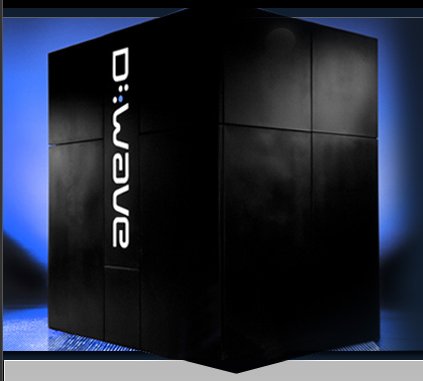
Learning to program the D-Wave One blog article tells that the processor in the D-Wave One – codenamed Rainier – is designed to perform a single mathematical operation called discrete optimization. It is a special purpose processor. When writing applications the D-Wave One is used only for the steps in your task that involve solving optimization problems. All the other parts of your code still run on your conventional systems of choice. Rainier solves optimization problems using quantum annealing (QA), which is a class of problem solving approaches that use quantum effects to help get better solutions, faster. Learning to program the D-Wave One is the first in a series of blog posts describing the algorithms we have run on D-Wave quantum computers, and how to use these to build interesting applications.
But is this the start of the quantum computers era? Maybe not. D-Wave Announces Commercially Available Quantum Computer article comments tell a story that this computer might not be the quantum computer you might be waiting for. It seem that the name “quantum computer” is a bit misleading for this product. There are serious controversies around the working and “quantumness” of the machine. D-Wave has been heavily criticized by some scientists in the quantum computing field. First sale for quantum computing article tells that uncertainty persists around how the impressive black monolith known as D-Wave One actually works. Computer scientists have long questioned whether D-Wave’s systems truly exploit quantum physics on their products.
Slashdot article D-Wave Announces Commercially Available Quantum Computer comments tell that this has the same central problem as before. D-Wave’s computers haven’t demonstrated that their commercial bits are entangled. There’s no way to really distinguish what they are doing from essentially classical simulated annealing. Recommended reading that is skeptical of D-Wave’s claims is much of what Scott Aaronson has wrote about them. See for example http://www.scottaaronson.com/blog/?p=639, http://www.scottaaronson.com/blog/?p=198 although interestingly after he visited D-Wave’s labs in person his views changed slightly and became slightly more sympathetic to them http://www.scottaaronson.com/blog/?p=954.
So it is hard to say if the “128 qubits” part is snake oil or for real. If the 128 “qubits” aren’t entangled at all, which means it is useless for any of the quantum algorithms that one generally thinks of. It seem that this device simply has 128 separate “qubits” that are queried individually, and is, essentially an augmented classical computer that gains a few minor advantages in some very specific algorithms (i.e. the quantum annealing algorithm) due to this qubit querying, but is otherwise indistinguishable from a really expensive classical computer for any other purpose. This has the same central problem as before: D-Wave’s computers haven’t demonstrated that their commercial bits are entangled.
Rather than constantly adding more qubits and issuing more hard-to-evaluate announcements, while leaving the scientific characterization of its devices in a state of limbo, why doesn’t D-Wave just focus all its efforts on demonstrating entanglement, or otherwise getting stronger evidence for a quantum role in the apparent speedup? There’s a reason why academic quantum computing groups focus on pushing down decoherence and demonstrating entanglement in 2, 3, or 4 qubits: because that way, at least you know that the qubits are qubits! Suppose D-Wave were marketing a classical, special-purpose, $10-million computer designed to perform simulated annealing, for 90-bit Ising spin glass problems with a certain fixed topology, somewhat better than an off-the-shelf computing cluster. Would there be even 5% of the public interest that there is now?
1,368 Comments
Tomi Engdahl says:
Guest Post — Quantum Digital Twins: The Missing Acceleration Layer for Quantum Hardware
https://thequantuminsider.com/2026/03/28/guest-post-quantum-digital-twins-the-missing-acceleration-layer-for-quantum-hardware/
Tomi Engdahl says:
IBM, Academic Partners Use Quantum Computer to Reproduce Key Material Properties, Testing Early Scientific Usefulness
https://thequantuminsider.com/2026/03/26/ibm-academic-partners-use-quantum-computer-to-reproduce-key-material-properties-testing-early-scientific-usefulness/
Tomi Engdahl says:
https://meetiqm.com/press-releases/iqm-a-global-leader-for-quantum-computing-to-become-the-first-listed-european-quantum-company-through-merger-with-real-asset-acquisition-corp/
Tomi Engdahl says:
Researchers find that a compact quantum system can outperform massive classical networks.
https://bit.ly/48cNDJQ
Tomi Engdahl says:
Sophie Shulman / CTech:
Israel-based Q-Factor, which is developing a quantum computer based on neutral atom technology, emerges from stealth with a $24M seed led by NFX and TPY Capital — Intel Capital-backed startup, founded by scientists from Weizmann and Technion, aims to move beyond current qubit constraints with neutral atom technology.
Stealth Israeli quantum startup Q-Factor emerges with $24 million in Seed funding and elite scientific team
Intel Capital-backed startup, founded by scientists from Weizmann and Technion, aims to move beyond current qubit constraints with neutral atom technology.
https://www.calcalistech.com/ctechnews/article/bj0iyqbhzl
Tomi Engdahl says:
EU:n uusin pilottilinja keskittyy puolijohdepohjaisiin kubitteihin
https://etn.fi/index.php/13-news/18754-eu-n-uusin-pilottilinja-keskittyy-puolijohdepohjaisiin-kubitteihin
Eurooppa ottaa seuraavan askeleen kvanttilaskennan teollistamisessa, kun puolijohdepohjaisiin spin-kubitteihin keskittyvä SPINS-pilottilinja on käynnistetty. Leuvenista mikroelektroniikan tutkimus IMECistä johdettava hanke kokoaa 25 tutkimus- ja teollisuustoimijaa rakentamaan polkua, jossa kvanttisiruja ei enää vain tutkita laboratoriossa, vaan valmistetaan hallitusti puolijohdeteollisuuden prosesseilla.
SPINS on yksi kuudesta EU:n kvanttipilottilinjasta, joilla pyritään kattamaan koko teknologinen kenttä. Taustalla on selkeä strategia: vielä ei tiedetä, mikä kubittiteknologia lopulta skaalautuu teolliseksi kvanttitietokoneeksi, joten kehitystä viedään rinnakkain usealla fysikaalisella toteutuksella.
Puolijohdepohjaisissa spin-kubiteissa informaatio koodataan yksittäisen elektronin spiniin piipohjaisessa rakenteessa. Lähestymistavan suurin etu on yhteensopivuus nykyisen CMOS-valmistuksen kanssa, mikä avaa mahdollisuuden erittäin tiheään integraatioon – käytännössä kvanttiprosessori voisi muistuttaa tulevaisuudessa tavallista sirua.
SPINSin rinnalla EU rakentaa viittä muuta pilottilinjaa, joista kukin edustaa erilaista kvanttifysiikan toteutusta:
Suprajohtaviin kubitteihin keskittyvä SUPREME, jota koordinoi VTT Technical Research Centre of Finland, on teknologisesti pisimmällä. Kubitit perustuvat Josephson-liitoksiin ja toimivat erittäin matalissa lämpötiloissa. Tämä on nykyisin yleisin lähestymistapa, jota hyödyntää myös IQM.
Tomi Engdahl says:
https://etn.fi/index.php/13-news/18765-iqm-n-arvo-jo-1-8-miljardia-uusi-rahoituskierros-vie-kohti-poerssiae
Tomi Engdahl says:
https://www.uusiteknologia.fi/2026/04/10/kohti-uusia-piipohjaisia-kvanttipiireja/
EU:n uusissa puolijohdealan Spins-pilottihankkeissa haetaan uutta nousua eurooppalaiselle puolijohdeosaamiselle. Jyväskylän yliopisto on mukana EU:n tukemassa kvanttipilottihankkeessa alan toimijoiden kanssa. Suomesta muita ovat VTT ja Semiqon Espoosta. Tekniikkoina ovat Si/SiGe-, Ge/GeSi-, and SOI-alustat.
Euroopan unionin tukemassa kvanttipilottihankkeessa keskitytään puolijohdepohjaisiin spin-kubitteihin ja kvanttisirujen kehittämiseen tulevaisuuden kvanttilaskentasovelluksia varten. Hankkeen kokonaisbudjetti on yhteensä 50 miljoonaa euroa.
Tomi Engdahl says:
The team trapped extremely cold potassium atoms in an optical lattice, a grid-like structure formed by laser light.
https://bit.ly/41XaMMK
Tomi Engdahl says:
What Quantum AI Actually Means
https://thequantuminsider.com/2026/03/30/what-quantum-ai-actually-means/
Insider Brief
Quantum AI refers to the intersection of quantum computing and artificial intelligence, encompassing both the use of quantum computers to accelerate AI workloads and the application of AI techniques to improve quantum hardware and algorithms.
The relationship is symbiotic rather than competitive: AI already plays a critical role in calibrating quantum systems, mitigating errors, and optimizing quantum circuits, while quantum computing offers potential speedups for specific AI bottlenecks like optimization and sampling.
Major technology companies including IBM, Google, Microsoft, and Amazon are exploring quantum AI applications, alongside specialized firms like Quantinuum, IonQ, and Zapata AI, though most practical applications remain years away from deployment.
Despite widespread misconceptions, quantum computing will not replace classical AI systems but may serve as a specialized co-processor for narrow tasks where quantum algorithms offer exponential advantages over classical approaches.
Tomi Engdahl says:
Research Team Finds Useful Quantum Computers Could Be Built with as Few as 10,000 Qubits
https://thequantuminsider.com/2026/03/31/research-team-finds-useful-quantum-computers-could-be-built-with-as-few-as-10000-qubits/
Insider Brief
New research from Caltech and Oratomic suggests fault-tolerant quantum computers could require only 10,000–20,000 qubits—far fewer than previously thought—potentially accelerating timelines to within this decade.
The team developed an ultra-efficient quantum error-correction architecture using neutral atom systems, reducing the number of physical qubits per logical qubit from around 1,000 to as few as five.
The findings imply faster progress toward practical quantum machines capable of breaking current encryption methods, increasing urgency for migration to quantum-resistant cryptography.
Image: Previous error-correction schemes, depicted on the left, require hundreds of physical qubits per logical qubit. The new scheme, depicted on the right, reduces this overhead by more than 100-fold. (Caltech/Robert Hurt,IPAC-SELab)
Tomi Engdahl says:
https://www.uusiteknologia.fi/2026/04/10/kohti-uusia-piipohjaisia-kvanttipiireja/
Tomi Engdahl says:
Allie Garfinkle / Fortune:
Sygaldry, which wants to design AI data center servers that integrate quantum hardware and classical chips, raised a $34M seed and a $105M Series A
Exclusive: Chad Rigetti’s Sygaldry raises $139 million to bring quantum hardware to AI data centers
https://fortune.com/2026/04/14/exclusive-chad-rigettis-sygaldry-raises-139-million-quantum-hardware-ai-data-centers/
Tomi Engdahl says:
Kyt Dotson / SiliconANGLE:
Nvidia releases Ising, which it says are the world’s first family of open-source quantum AI models, aimed at quantum computing calibration and error correction
Nvidia unveils Ising AI models for quantum error correction and calibration
https://siliconangle.com/2026/04/14/nvidia-unveils-ising-ai-models-quantum-error-correction-calibration/
Technology and computing giant Nvidia Corp. today announced the release of Ising, the world’s first open artificial intelligence model family aimed at quantum computing calibration and error correction.
Nvidia, whose main business is the graphics processing units that power AI, said these AI models will allow researchers and enterprise companies to build better quantum computers capable of running useful applications at scale.
To build and run useful applications, quantum computers must handle millions of qubits — the atomic computational units of quantum information. The essential problem is that qubits are fragile, error-prone and susceptible to noise at scale. As quantum computers grow, they must be error-corrected and calibrated in real time to account for environmental factors and remain useful.
“AI is essential to making quantum computing practical,” founder and Chief Executive Jensen Huang said. “With Ising, AI becomes the control plane — the operating system of quantum machines — transforming fragile qubits into scalable and reliable quantum-GPU systems.”
Ising is named after the landmark mathematical model that helped simplify the understanding of complex physical systems by describing how interacting particles, or spins, influence one another. Nvidia is providing two models: one for real-time error correction and one for calibration.
The need for error correction is obvious: It turns noisy systems into coherent outputs. That is where Ising Decoding comes in. Decoding comes in two variants of a 3D convolutional neural network model, one optimized for speed and the other for accuracy, that perform real-time decoding for quantum error correction. Nvidia said the models provide up to 2.5 times more speed and three times more accuracy than pyMatching, the current open-source industry standard.
Ising Calibration allows physicists to prepare systems by tuning, measuring and optimizing physical control signals, such as microwaves or lasers. This calibration is necessary to ensure high-fidelity outputs by correcting for noise, hardware instability and parameter drift over time. It’s a vision-language model that can rapidly interpret and react to measurements from quantum processors, driving AI agents that automate continuous calibration.
Tomi Engdahl says:
https://etn.fi/index.php/13-news/18477-vtt-n-johtamassa-hankkeessa-kehitetaeaen-200-kubitin-moduuli
Tomi Engdahl says:
IQM tekee kvanttikoneiden käytöstä helpompaa automatisoimalla kalibroinnin
https://etn.fi/index.php/13-news/18793-iqm-tekee-kvanttikoneiden-kaeytoestae-helpompaa-automatisoimalla-kalibroinnin
- Haluamme, että yritykset käyttävät kvanttikoneita, eivät vain tutki niitä. Kalibrointi on ollut hiljainen pullonkaula, sanoo IQM:n Juha Vartiainen. Yhtiö esittelee AI-ohjattua kalibrointia, jolla kvanttikoneiden ylläpitoa pyritään automatisoimaan ja irrottamaan harvinaisesta asiantuntijaosaamisesta.
IQM pyrkii siirtämään kvanttikoneiden ylläpidon yhdestä vaikeimmasta kohdasta automaation piiriin. Yhtiö esitteli AI-ohjatun agenttikalibroinnin, jossa järjestelmä tarkastaa useiden kubittien kalibrointituloksia rinnakkain sen sijaan, että säätö etenisi vaihe vaiheelta peräkkäin.
Muutos kohdistuu käytännön ongelmaan, joka korostuu prosessorien kasvaessa. Kubittien määrän mukana myös niiden välisten vuorovaikutusten määrä kasvaa nopeasti, jolloin perinteinen, pitkälti käsityöhön nojaava kalibrointi ei skaalaudu. IQM:n mukaan rinnakkainen, agenttipohjainen tarkastelu mahdollistaa nopeamman reagoinnin ja tasaisemman suorituskyvyn.
Ratkaisu rakentuu Nvidian Ising-malliperheen päälle, ja AI-agentit liitetään osaksi IQM:n nykyistä kalibrointi-infrastruktuuria. Tavoitteena ei ole korvata taustajärjestelmää, vaan automatisoida sen kriittisimpiä vaiheita. Tämä on keskeistä käytettävyyden kannalta. Jos kalibrointi ei enää edellytä paikalla olevaa kvanttiasiantuntijaa, kvanttikoneen operointi voi siirtyä lähemmäs tavallista datakeskusympäristöä.
Tomi Engdahl says:
Kvanttikoneiden skaalautuminen uhkaa kaatua jäähdytykseen
https://etn.fi/index.php/13-news/18792-kvanttikoneiden-skaalautuminen-uhkaa-kaatua-jaeaehdytykseen
Kvanttitietokoneiden kasvua rajoittaa yhä useammin käytännön laitteistofysiikka eikä pelkkä kubittien määrä. Göteborgilaisen Chalmersin teknisen korkeakoulun tutkijoiden mukaan usean kubitin ohjaaminen yhdellä kaapelilla voi vähentää jäähdytyskuormaa ilman merkittävää hidastusta.
Kvanttitietokoneiden skaalaus törmää nopeasti lämpöön. Kun kubittien määrä kasvaa, jokainen ohjauskaapeli tuo lisää lämpökuormaa kryostaattiin, jossa järjestelmä toimii lähellä absoluuttista nollapistettä. Samalla kaapelit vievät fyysistä tilaa, mikä rajoittaa käytännössä rakennettavien järjestelmien kokoa.
Chalmersin tutkijat esittävät ratkaisuksi kaapelien jakamista usean kubitin kesken. Sen sijaan että jokaista kubittia ohjattaisiin omalla linjallaan, ohjaussignaalit voidaan ohjata vuorotellen eri kubiteille saman kaapelin kautta. Menetelmä perustuu mikroaaltokytkimiin ja aikajakoon, jossa signaali reititetään nopeasti oikeaan kohteeseen.
Keskeinen kysymys on ollut, hidastuuko laskenta liikaa, jos kubitit joutuvat odottamaan vuoroaan. Tutkimuksen simulaatiot viittaavat siihen, että näin ei useimmissa tapauksissa tapahdu. Monissa tavallisissa kvanttialgoritmeissa ajoaika kasvaa vain vähän, ja joissakin kahden kubitin operaatioissa lisäviivettä ei synny käytännössä lainkaan tietyissä topologioissa.